
South African architecture reflects centuries of diverse cultural heritage —from early traditional African buildings shaped by climate and community, to more recent colonial architecture, and finally a new generation of contemporary African design that is redefining luxury and place on the continent and globally.
share
South African Architecture: Feats of Art and Engineering from the City to the Bush
From the contemporary skyscrapers of Cape Town to the remotest of safari lodges in the heart of the wild, South African architecture—central to the wider story of African architecture—speaks to the country's rich history and culture, as well as itsirrepressible ingenuity and creative spirit.
With the Cape Town Art Fair approaching in early 2026, there is no better time to take stock of the remarkable design that lures so many of us to South Africa time and again.
We explore the iconic urban structures that make the country a world-class architecture destination, as well as some of the most famous buildings in South Africa. We also hear from a dear friend and renowned South African architect, Anton de Kock, about the rewards and challenges of building breathtaking properties in the Botswana wilderness.
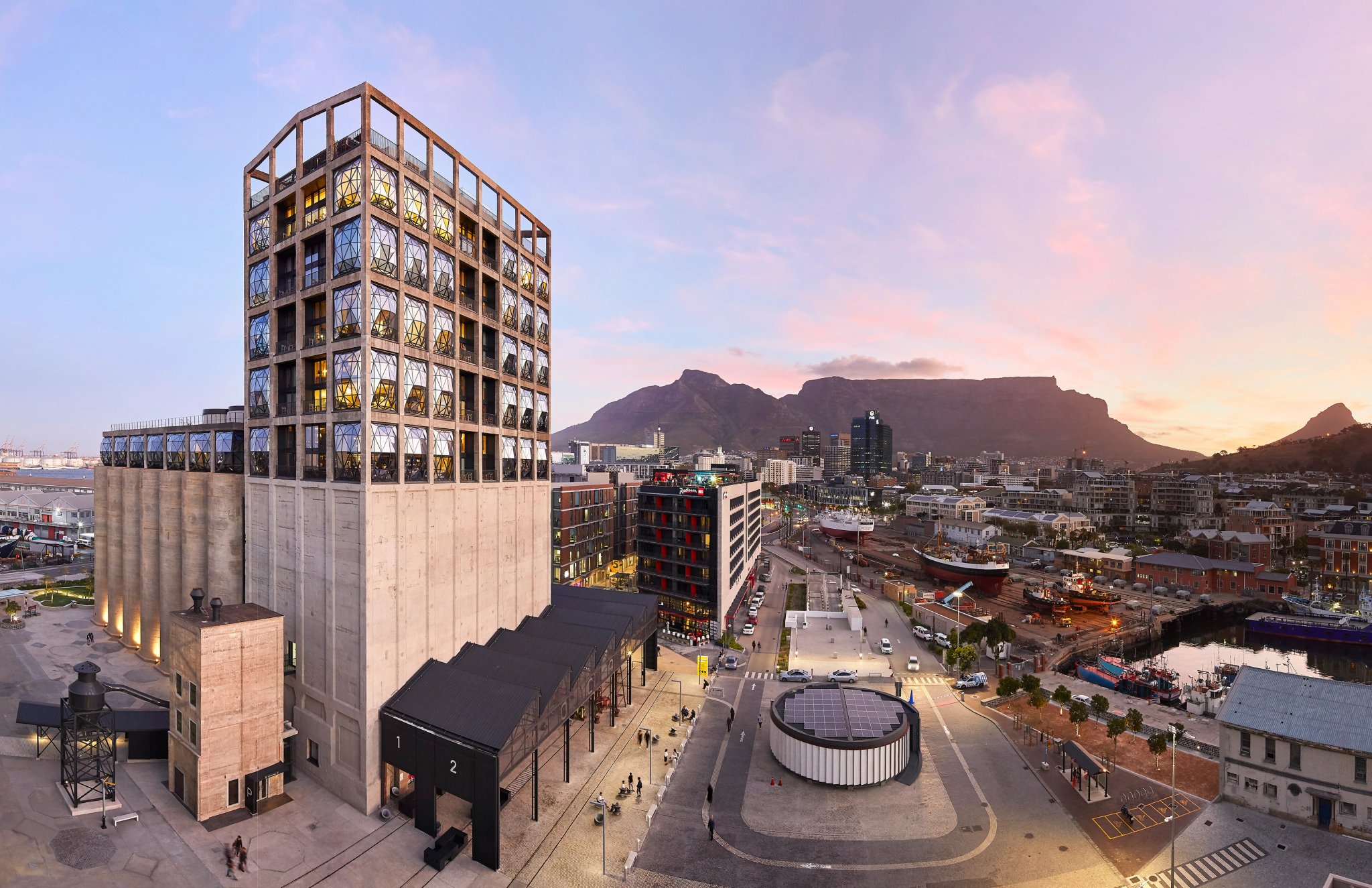
Zeitz MOCAA, Cape Town
Characteristics of South African Architecture
South African architecture is defined by its remarkable ability to absorb influence while remaining deeply rooted in in its diverse culture. Shaped by centuries of human migration, trade, and cultural exchange, it reflects a dialogue between ancient indigenous knowledge, colonial history, and contemporary innovation.
What makes South African architecture unique?
Centuries of multicultural influence have informed South African architecture. The unique blend of building styles found today tells stories about the people who have called this country home, and their values—from functionality to sustainability to integration with nature.
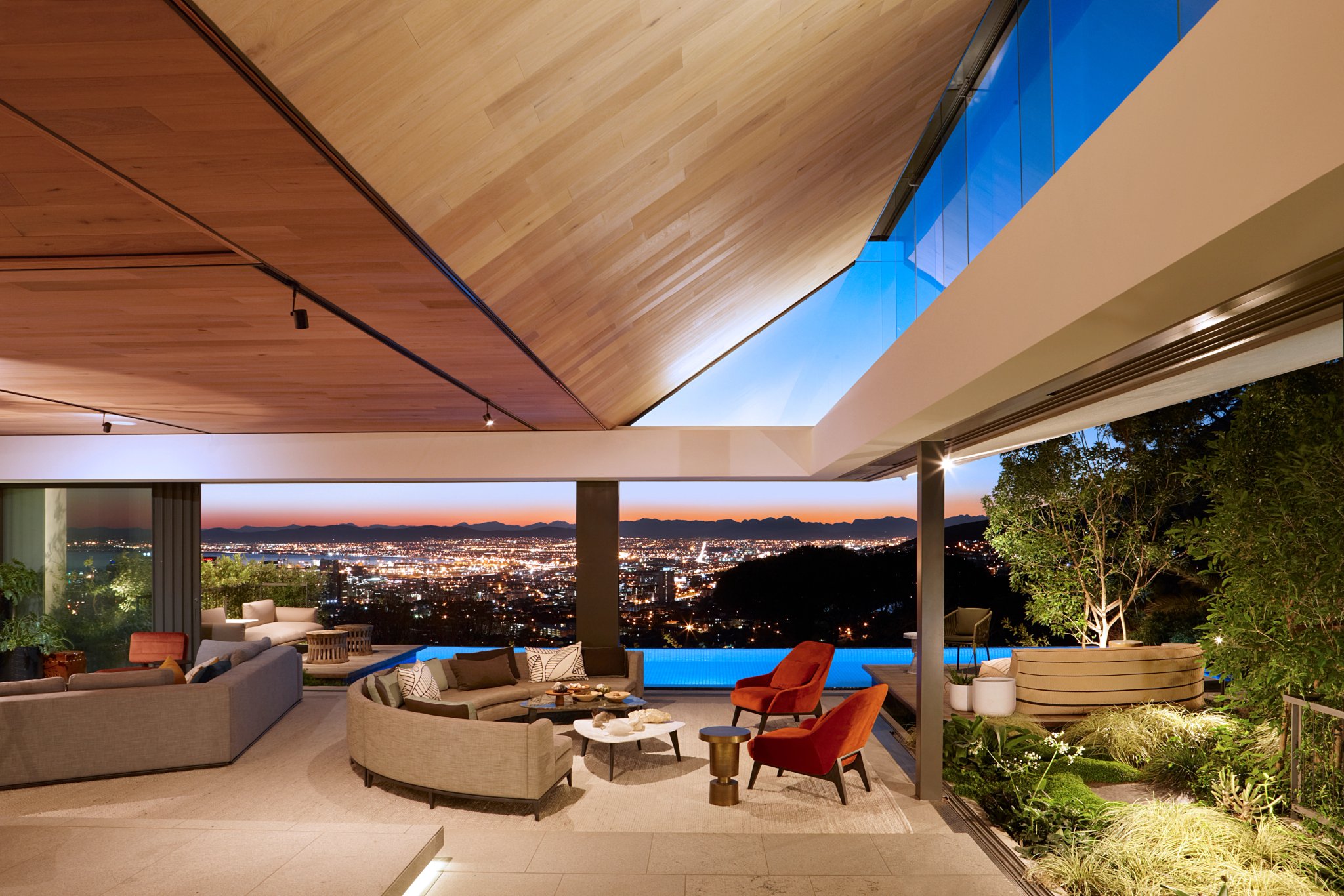
The interaction of ultra-modern buildings with unspoiled wilderness, particularly in the beautiful, oceanside city of Cape Town, is a defining feature of South African architecture and an immense inspiration for ROAR AFRICA’s South African safaris. This dialogue between city and landscape is also a hallmark of many contemporary African buildings.
What are the most iconic South African architectural styles?
South Africa's architecture can be understood through several defining styles, each representing a different chapter in the country's cultural and architectural story.
Indigenous architecture
Natural, local materials such as grass, mud and wood form the base of native South African structures—typically circular in shape with thatched roofs. Zulu iQukwane, or beehive huts, feature a circular wood frame built around a central tree trunk and covered by woven grass and rope to create a stable, dome-shaped hut that stays cool in the summer and warm in the winter.
This architectural style precedes South Africa's colonial past and persists today in indigenous communities. It also laid the foundation for many African buildings that continue to influence the continent's modern architecture today.
Cape Dutch architecture
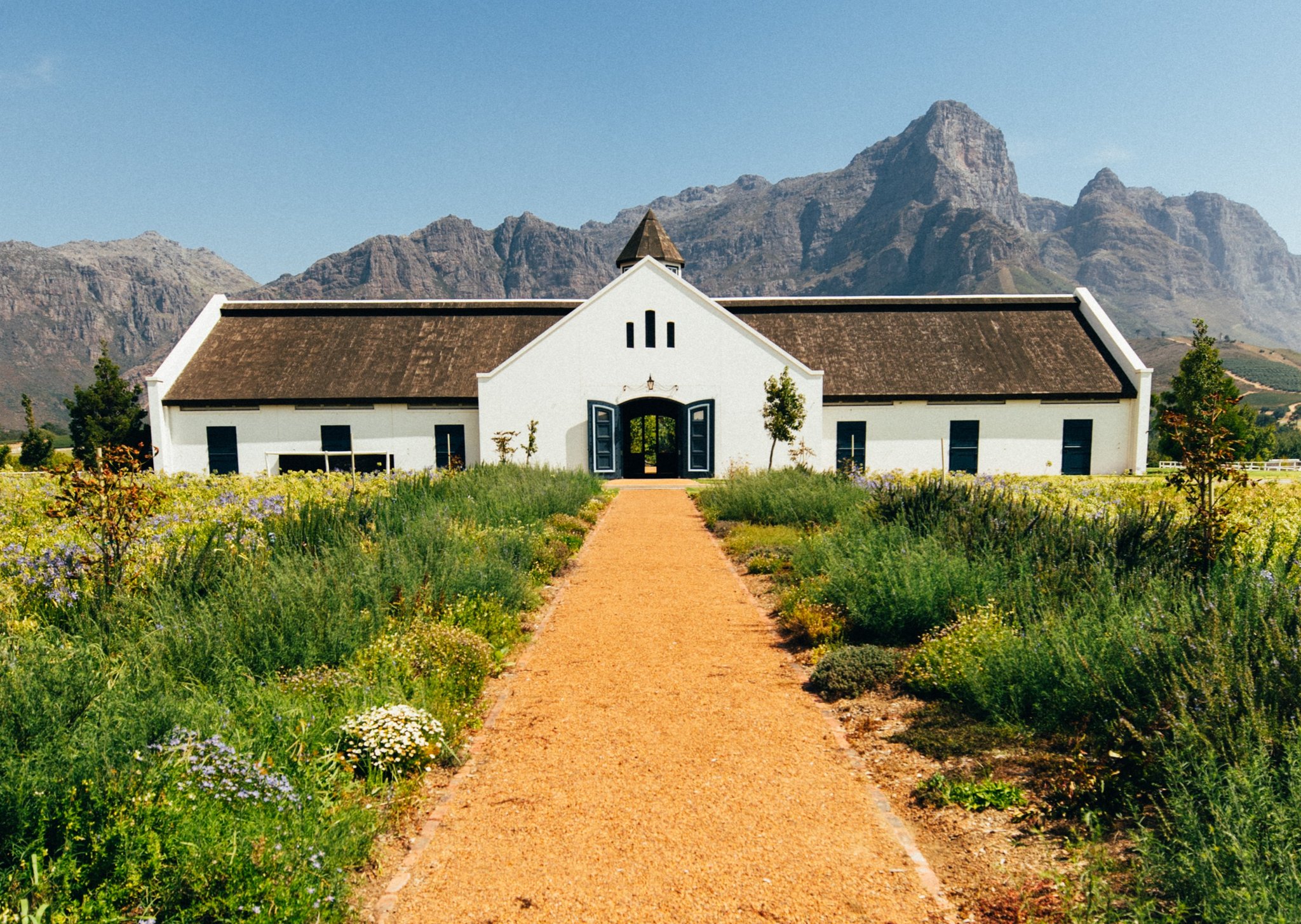
With the arrival of European settlers in 17th-century South Africa came Cape Dutch architecture, known for its whitewashed walls, shuttered windows, thatched roofs, and front gables.
These instantly recognizable homes remained common even after the end of colonial rule, leaving behind traces of Dutch, Belgian, and French design.Today, they remain among the clearest and most enduring expressions of South Africa's colonial architecture, particularly in the Cape Winelands
Contemporary architecture
Despite a shift from natural materials to glass, steel, and concrete, South Africa's contemporary architecture often displays a deep reverence for the environment—whether through sustainable design features or expansive windows that allow the outside in. Straight lines and open floor plans place the spotlight on interior spaces, often showcasing contemporary and traditional African works of art.
ROAR AFRICA's custom architecture and private home experiences, delve deeper, revealing both iconic and rarely seen structures—from the stark architecture of the Apartheid era to contemporary homes poised dramatically above Cape Town's Atlantic coastline.
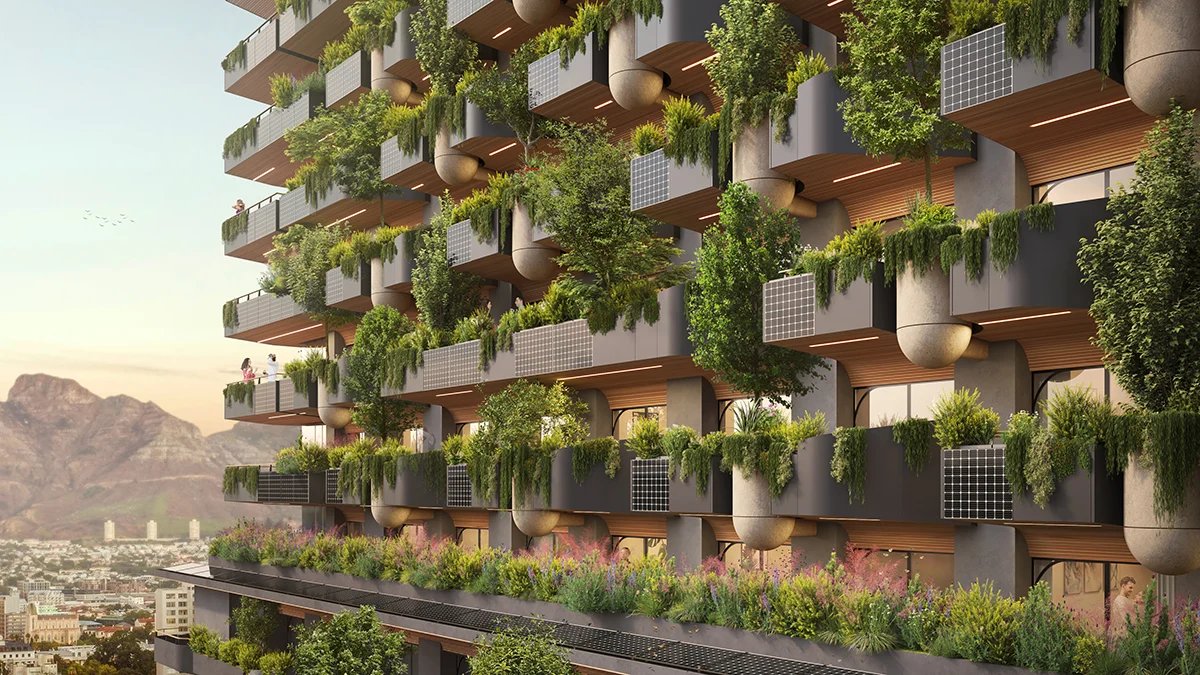
The Fynbos
Famous Buildings That Define South African Architecture
Cape Town, home to most of our ROAR AFRICA team, wins our guests over not only for its pristine beaches, stunning diversity of flora and fauna, and world-class food and wine, but also for some of the most celebrated famous buildings in South Africa, from cultural institutions to innovative residential design.
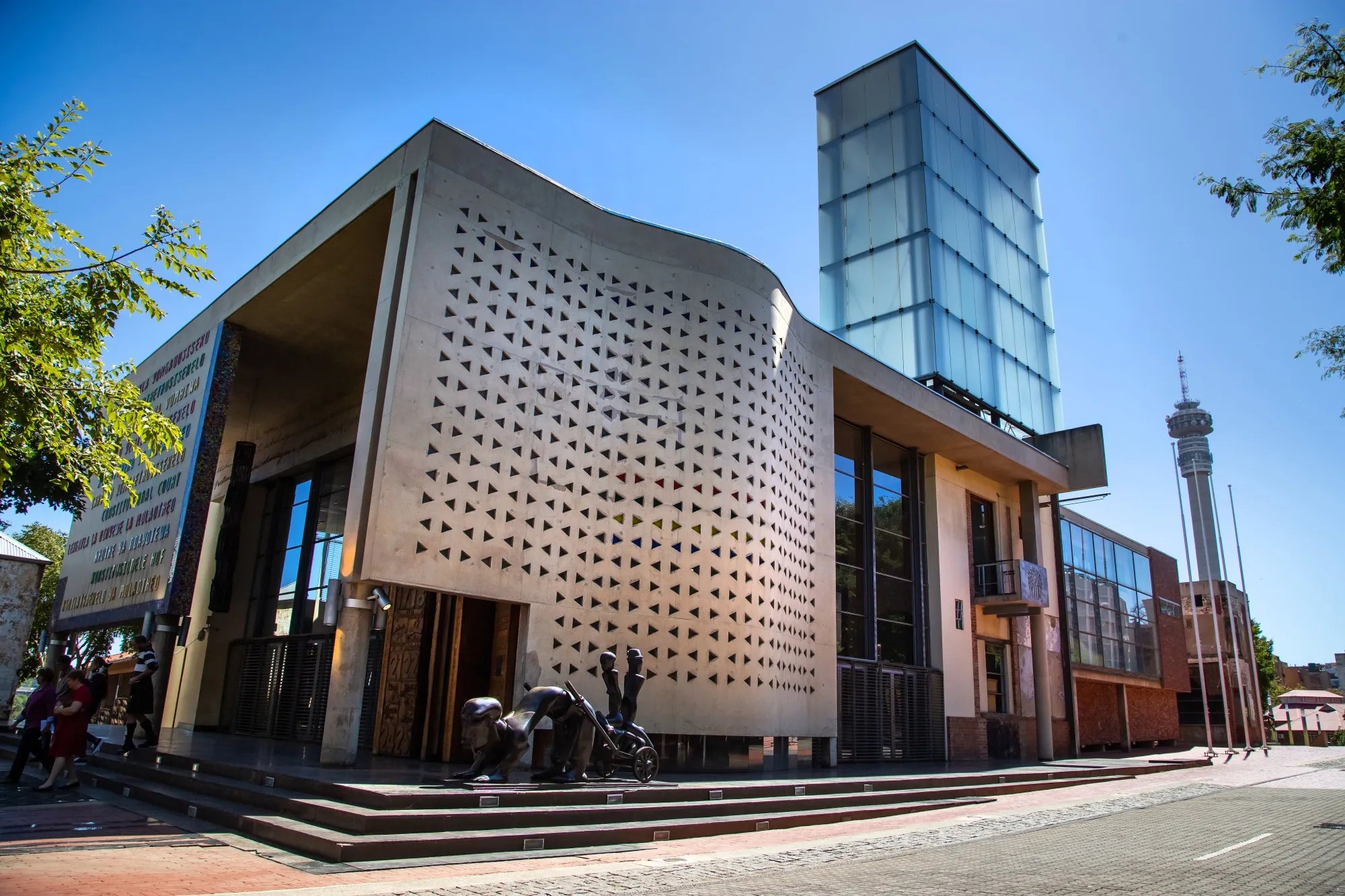
The Constitutional Court in Johannesburg
Zeitz MOCAA
Africa's first UNESCO City of Design, Cape Town is home to structures known and loved around the globe—chief among them the Zeitz MOCAA. This museum, the first dedicated exclusively to contemporary African artists, occupies an imaginatively transformed grain silo: a concrete cathedral punctuated by near-kaleidoscopic windows that flood the space with warm African light.
The Fynbos
And then there is The Fynbos, a 689-unit apartment building and vertical garden that uses the Western Cape's native flora for climate control, water efficiency, and a profound connection to nature in the heart of the city.
Constitutional Court of South Africa
Set on the site of a former prison complex in Johannesburg, the Constitutional Court stands as one of the most powerful examples of post-apartheid South African architecture. Designed to embody transparency, democracy, and human dignity, the building incorporates locally sourced materials, stained-glass windows, and artworkthroughout.
Its open public spaces and integration of historical remnants transform a place of confinement into one of justice and collective memory—a defining landmark among the most famous buildings in South Africa.
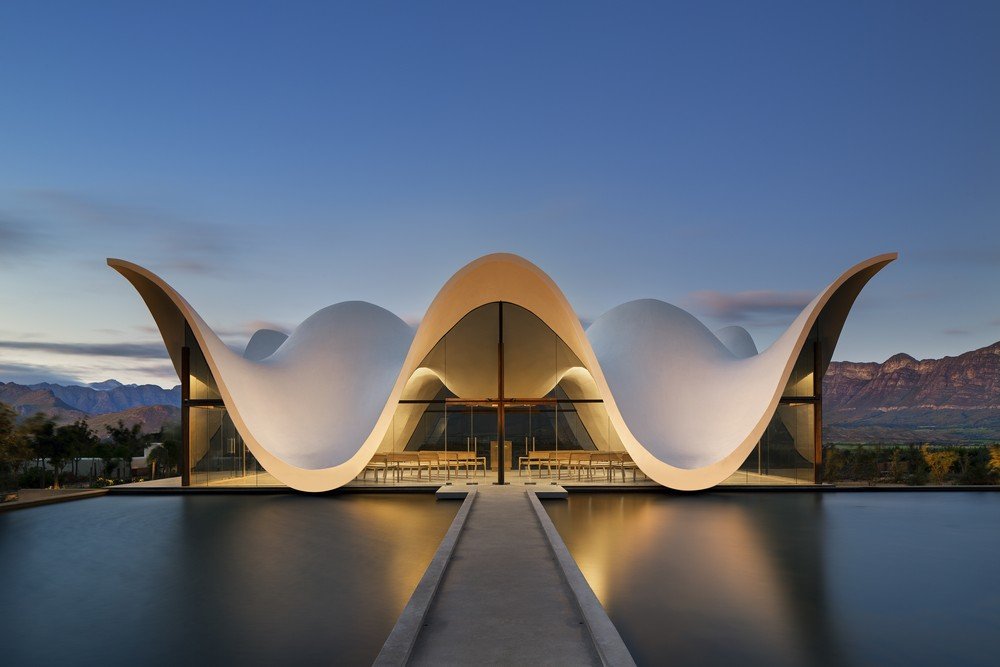
Bosjes Chapel, Western Cape
Anton de Kock and African Architecture Inspired by Nature
A defining characteristic of contemporary African architecture is its deep responsiveness to the surrounding landscape. Few South African architects articulate this relationship more clearly than Anton de Kock, whose work is guided by the belief that buildings should emerge from their environment rather than dominate it. This philosophy finds expression in some of Southern Africa's most striking landmark structures.
Maropeng Visitor Centre, Cradle of Humankind
Further afield, the Maropeng Visitor Center for the Cradle of Humankind, outside Johannesburg, appears to rise organically from the hilly landscape. Designed as a grass-covered burial mound that conceals the exhibits within, the structure mirrors the geological formations surrounding it, creating a powerful sense of continuity between architecture and ancient human history.
Bosjes Chapel, Western Cape
A similarly emotive effect is found at Bosjes Chapel, just outside the Cape Winelands. Its undulating roofline seems to lift and fall with the winds of the Waaihoek mountains, transforming the building into a sculptural expression of movement, light, and place.
African architecture guided by place
While each of these landmarks is distinct, they resonate strongly with the philosophy of Anton de Kock, our dear friend and the architect behind the Two Oceans Aquarium at the V&A Waterfront and the Oyster Box Hotel in Durban. As he explains:
"I grew up on a farm and was always interested in the structure of nature. When you want to create extraordinary architecture, you need to draw inspiration from the place, the locality."
When architecture is guided entirely by place, its greatest test often lies beyond the city and in landscapes where access, infrastructure, and permanence cannot be taken for granted.
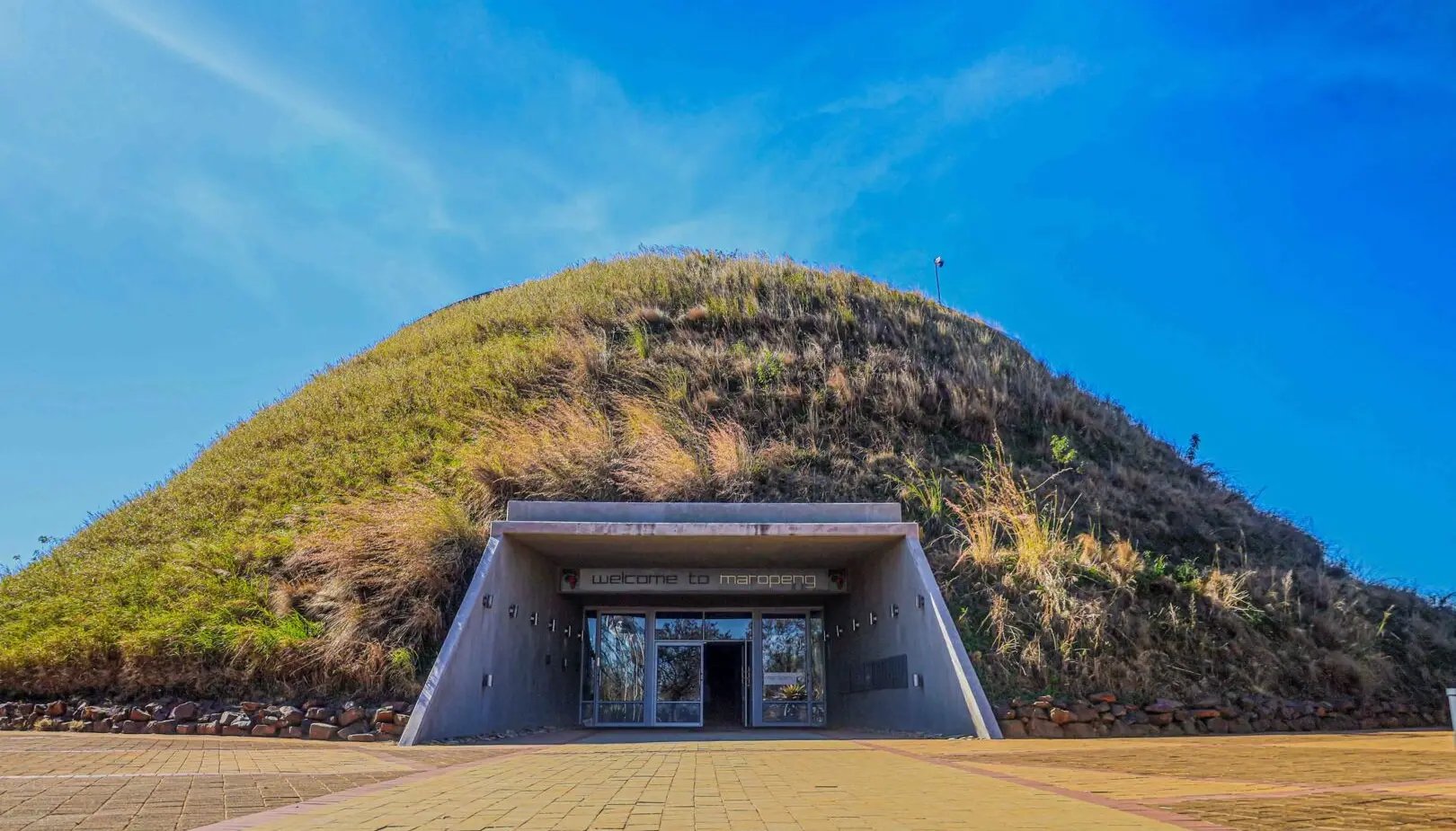
Maropeng Visitor Center for the Cradle of Humankind
Building in the Bush: Architecture at the Edge of the Wild
Ideating groundbreaking architecture in Cape Town or Johannesburg is one feat, but doing so in the wild is another entirely.
Xigera Safari Lodge
For Anton de Kock, whose work is rooted in responsiveness to landscape, this challenge came sharply into focus while working on the award-winning Xigera Safari Lodge in Botswana's Okavango Delta. Anton recalls:
"The most difficult challenge of creating something in the middle of nowhere is to get things there in one piece. I never realized that I would be designing the containers in which the structures went."
With the materials finally in place, constructing the canvas-and-steel stilted tents above the life-giving waters of the Okavango Delta was just another fraction of the job—the team would also need to generate solar power, source water, and design sustainable waste-management systems. Finally, any structure built in the bush must be designed with the future in mind.
"What's extremely important is that it's all removable, so you can take the entire thing apart and then reuse the steel somewhere else," Anton explains, adding that the bronze used to build Xigera can be melted down and repurposed over many lifetimes.
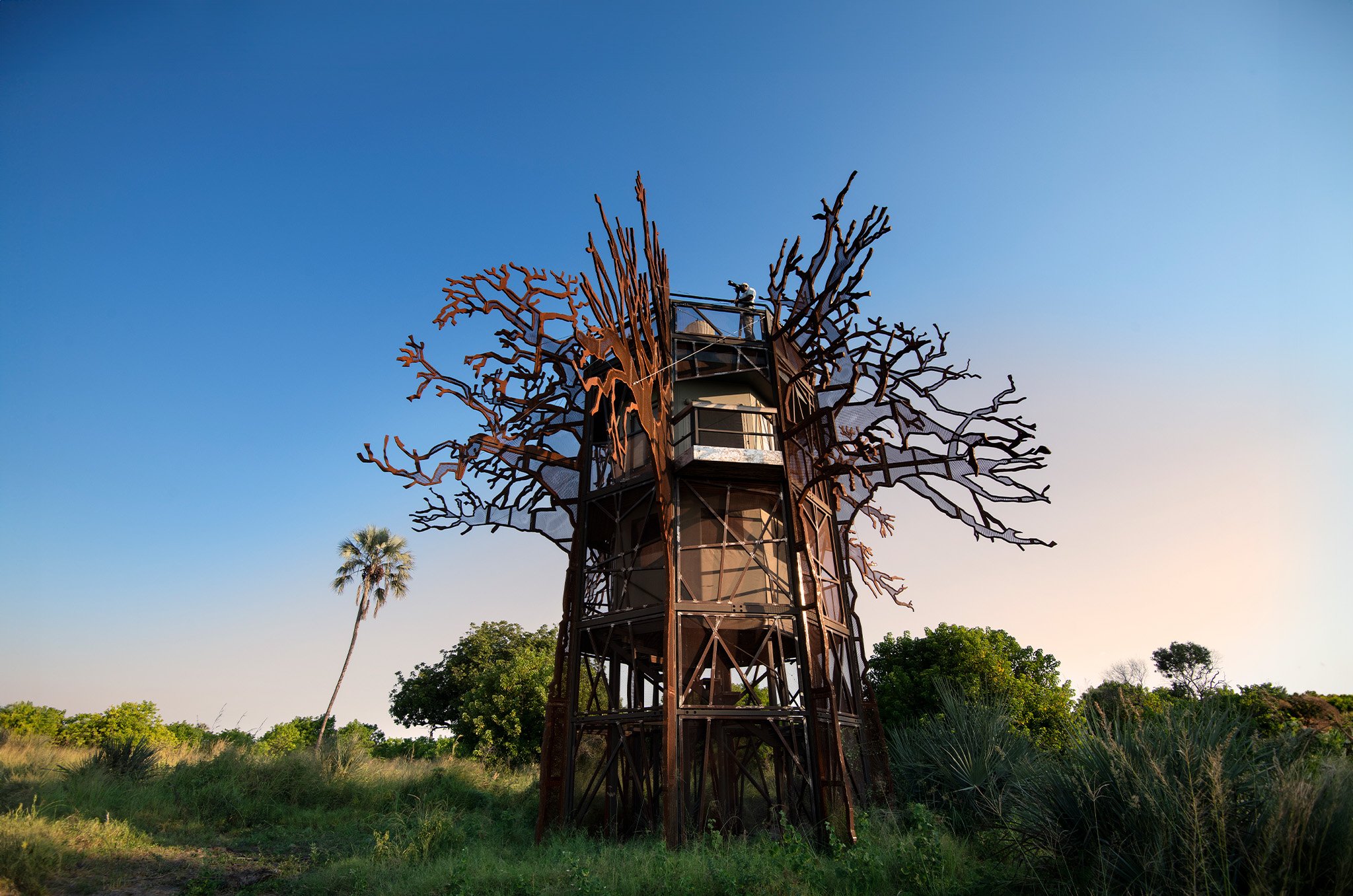
Xigera Safari Lodge, Botswana's Okavango Delta
Mapungubwe Interpretation Center
Anton's experience underscores a central responsibility of African architecture in the wild: to respect the environment while enhancing the lives of those who inhabit it. One of our favorite expressions of this principle in action in the South African bush is the Mapungubwe Interpretation Center in Mapungubwe National Parkin South Africa's Limpopo Province.
It was designed by South African architect Peter Rich, who won the 2009 World Building of the Year award for the project, which employed local workers to create the building materials using the surrounding earth. The result—a cluster of cave-like structures that blend seamlessly into the rocky landscape—pays homage to the UNESCO site's ancient trading civilization whilecontinuing to serve local communities. It is an enduring expression of architecture shaped by respect, responsibility, and love of place.
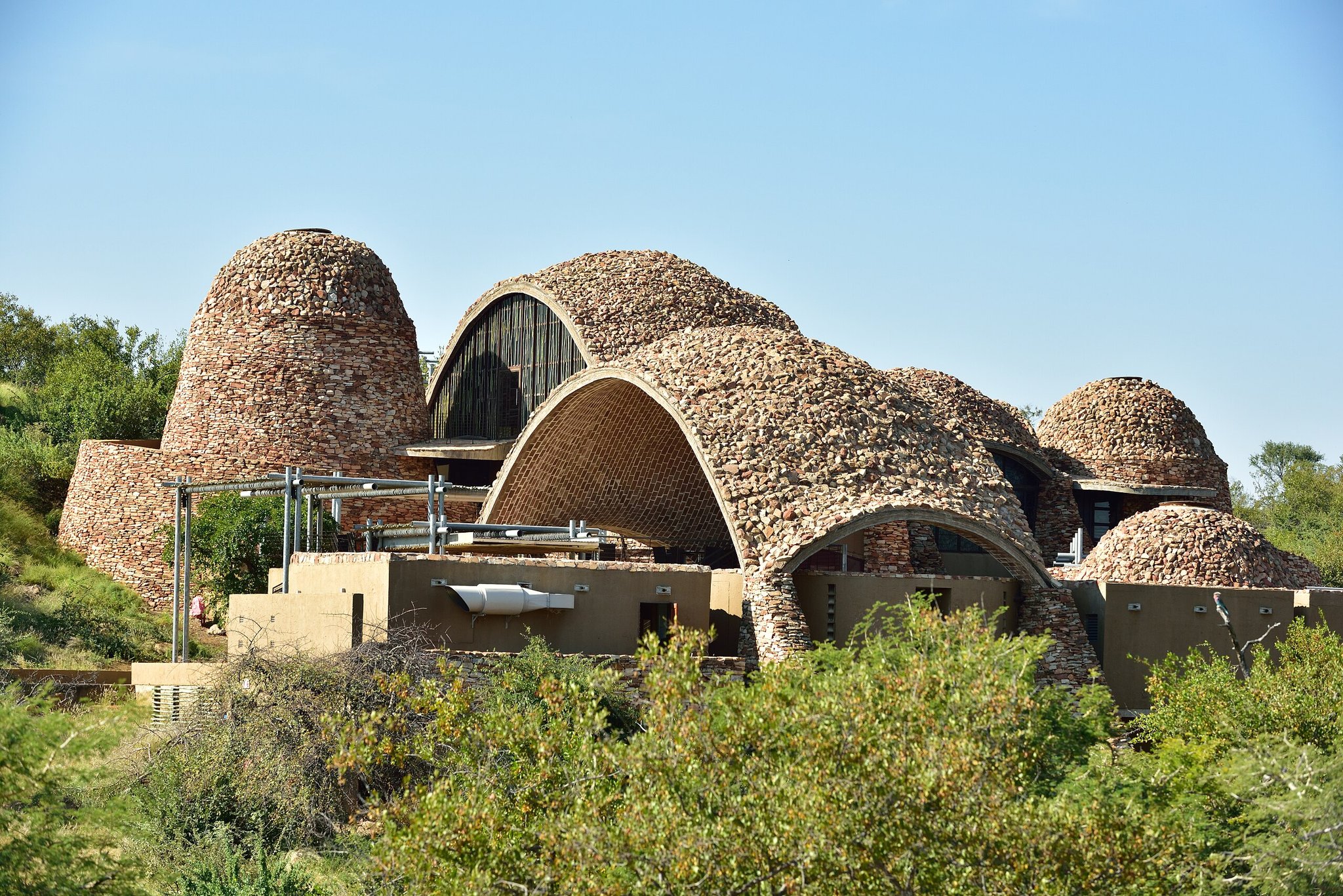
Mapungubwe Interpretation Center in Mapungubwe National Park in South Africa's Limpopo Province
Experience South African Architecture with ROAR AFRICA
Explore South Africa's innovative architecture, breathtaking landscapes, and unforgettable wildlife on a individually designed, life-changing safari with ROAR AFRICA. From the iconic streets of Cape Town to remote safari lodges like Xigera in Botswana, our carefully curated itineraries allow you to explore both celebrated South African buildings and hidden architectural gems inspired by nature.
Discover our destinations and take a journey through a seamless blend of design, culture, and adventure that makes Southern Africa a world-class destination for architecture lovers.
Inquire today and let ROAR AFRICA craft your personalized itinerary to visit South Africa and the architecture that brings its landscape to life.
More from ROAR AFRICA

September 25, 2025Wonder
What camera equipment should I take on safari?Undecided on how to capture the best moments on safari? The team of experts at ROAR AFRICA have created this helpful guide covering what camera equipment you need.
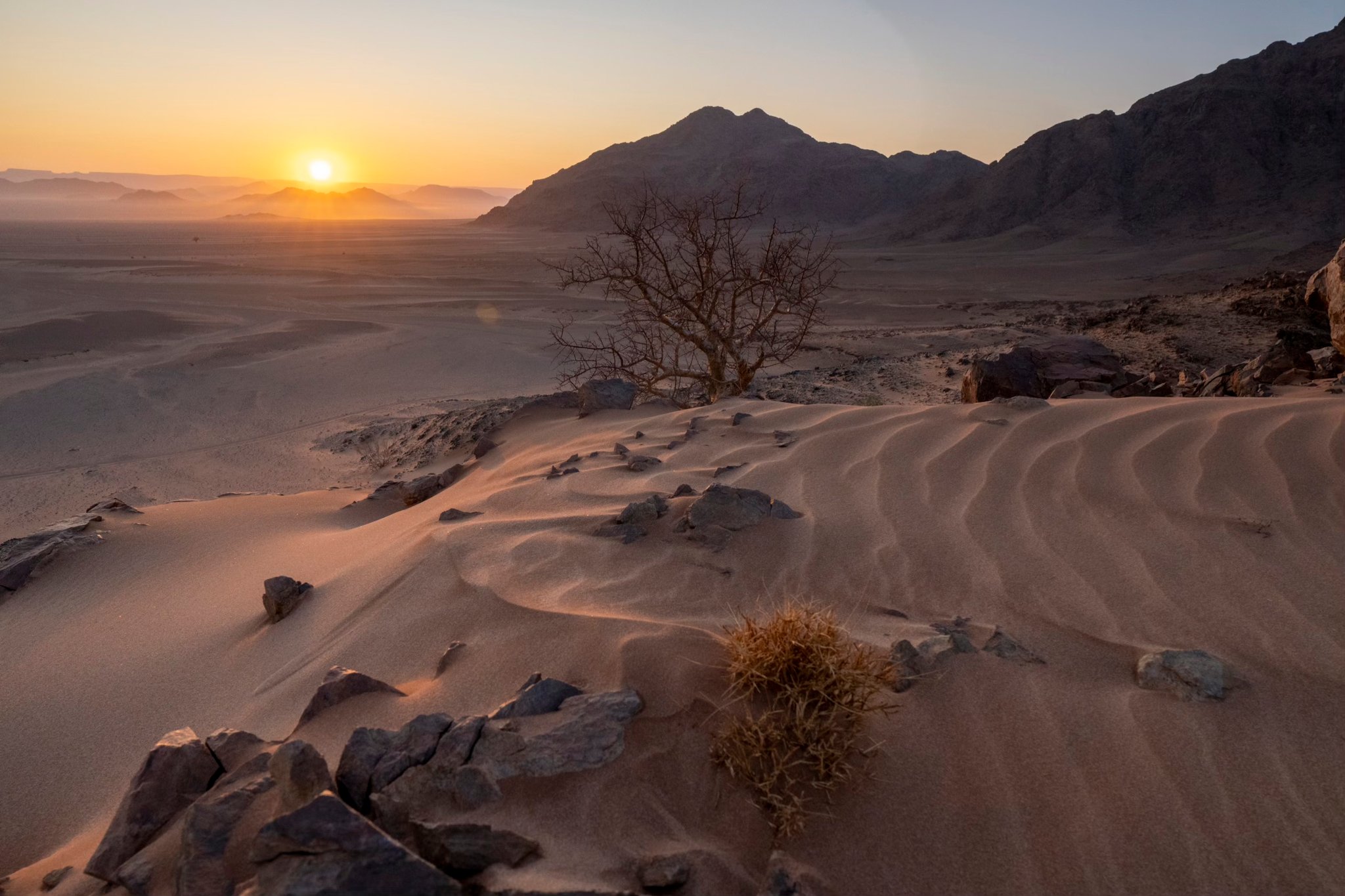
November 8, 2024Wonder
Namibia: where nature's artistry reshapes the earthIf Mother Nature’s sheer power and resilience could be exemplified in one place on the planet, it would be the dramatic, unimaginably vast landscapes of Namibia.
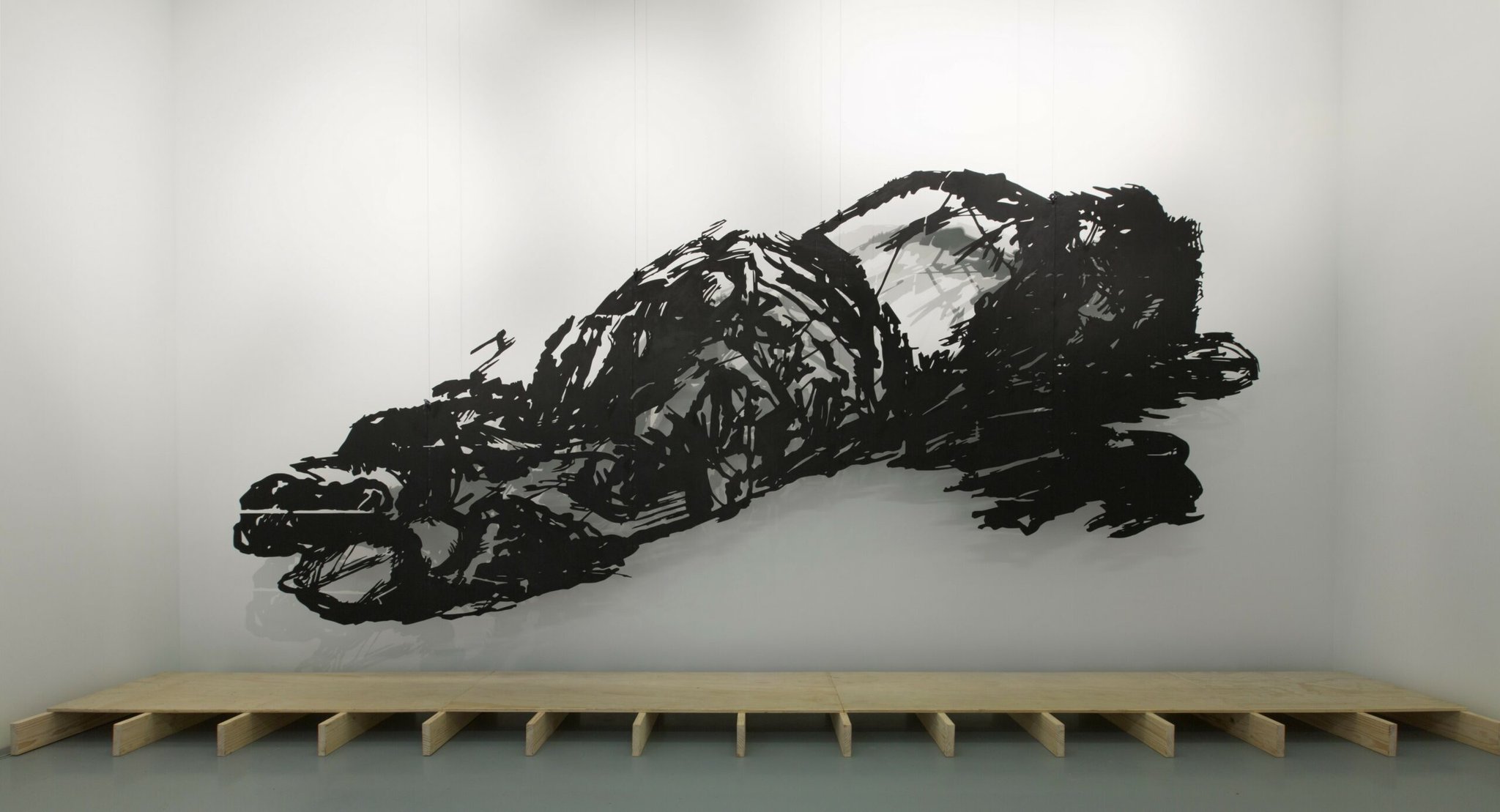
February 27, 2020Wonder
William Kentridge - Why Should I Hesitate Exhibition.I love Kentridge’s monochromatic signature style and so I made it my mission to visit the Norval Foundation last year in August when it opened.
