
In search of wild awe

October 3, 2025
share

When I opened the New York Times last week, on September 28th, I was struck by the headline:

The Morning: September 28th

New York Times, In Search of Awe

“We are in the middle of the Days of Awe, the 10-day span between the Jewish holidays of Rosh Hashanah and Yom Kippur, a solemn period of repentance and reflection. As part of our reporting on how people experience religion and spirituality now, Emma Goldberg explores a new approach to awe.”

How rare it is for such a widely-read newspaper to grapple with a feeling that so often escapes language. And yet, there it was: awe not as a mysterious, intangible emotion, but as something we can measure and cultivate.

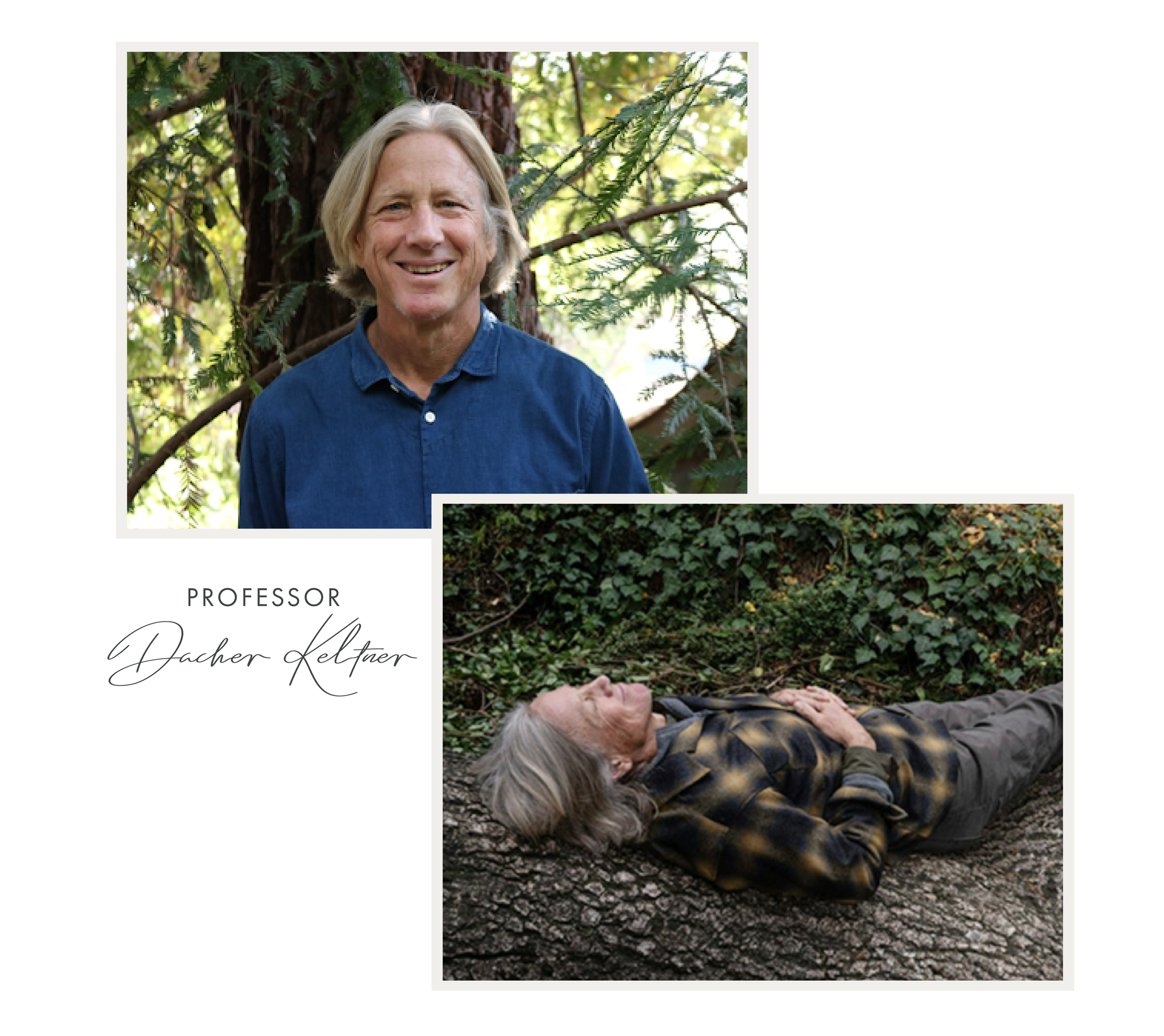
In the piece, author Emma Goldberg highlights the work of Professor Dacher Keltner, UC Berkeley psychologist and best-selling author, who was one of the first to delve into the science behind awe. I smiled reading it, not only because I am honored that Professor Keltner will co-host our Journey to Awe retreat in Kenya next year, but because it affirmed something I have always felt. Growing up in Africa, I was lucky enough to encounter awe almost daily. It was in the glow of the orange sun peaking up over the inky waters of Lake Kariba, in the piercing cry of the African fish eagle as she soared above in the vast, blue sky. For years, I struggled to name the sensation that these experiences evoked: heart slowing, mind quieting, a softening around the edges of myself, sheer and utter delight. Then the science caught up with what the body already knew… awe is a muscle to develop, not simply an experience that washes over us.


As human beings, we rarely notice awe. Our days are crammed with schedules and screens, beeps and pings, and we leave little room for any sort of enchantment. We are, as Professor Keltner describes, living in an “awe deficit.” Yet science now tells us that awe isn’t a luxury, but essential for our state of being.

At Berkeley, Professor Keltner’s team has shown that awe lowers inflammation, calms the nervous system and strengthens our sense of connection. Neuroscientists at UCSF even describe awe as shifting us out of “fight-or-flight” and into “rest-and-digest,” the body’s ultimate healing mode. These aren’t abstract ideas, but proof that awe rewires us, both in mind and body. Keltner’s research also shows that awe, unlike pleasure, doesn’t diminish with repetition. Eating chocolate for example, loses its thrill after the third bite – but awe-inducing experiences stay just as powerful every time.

One of the ideas that struck me the most in the NY Times article was the reminder that awe is not reserved for once-in-a-lifetime moments or grand symphonies, but that we can find it in the small details of our days: the birds chattering in the morning, the moment of kindness from a stranger on the subway, the fragility of a spider’s web or the pattern on an autumn leaf. It’s this kind of everyday awe that steadies and softens us, and reminds us to notice.

But what happens when we step into landscapes that are so vast they reorganize our sense of time and self? When the stars fill the sky and you look up, properly, for the first time in years? When the silence stretches so wide you can hear the workings of your inner ear and when there is so much air to simply breathe?

For me it is a feeling of collective effervescence. Sitting in the bush in a Landrover, my gaze stretching for miles across clouds, sky, dust, wildlife, I am always overcome with gratitude for being alive… that I get to live this life with such a profound and regular connection to the wild. This is what Professor Keltner calls wild awe: those moments when the self dissolves and we glimpse our place in something infinitely larger; when our shoulders drop, our breath returns and we truly experience inner peace. Yet the paradox of awe is that it makes us feel small, and in that smallness, we become more expansive, more connected, more alive.

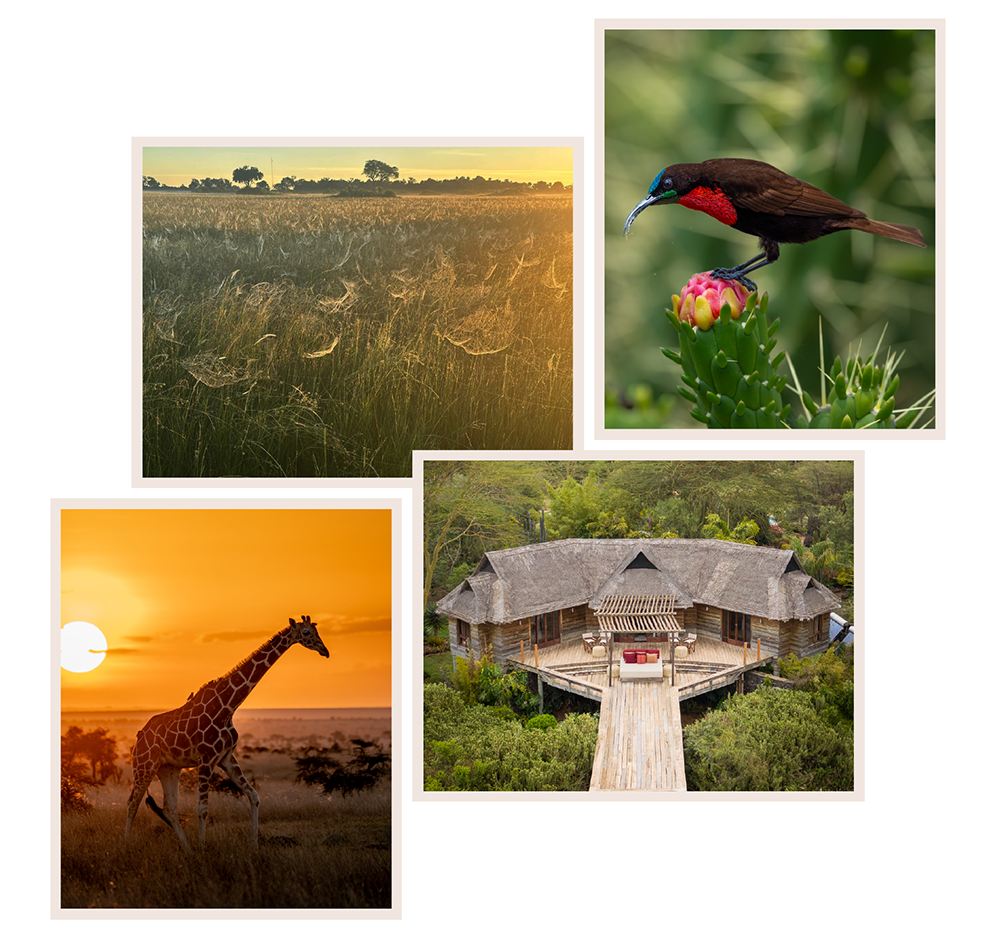
This is the very experience that I will be exploring and nurturing with Professor Dacher Keltner and our guests in Kenya, during A Journey to Awe. We will spend time at Segera Retreat in the shadow of Mount Kenya, where rewilded land now holds one of Africa’s most significant rhino corridors. It is a place where moral beauty, collective vitality, music, design, and the cycles of life, the very “pillars of awe” Keltner’s research describes, coexist. Here, we will practice our muscles of awe amid some of the continent’s most spectacular wildlife and landscapes, re-orienting our minds and souls.

If awe is indeed a biological necessity, then perhaps the greatest gift we can give ourselves is to build our lives around it. My invitation is to begin where you are. Let everyday awe be your daily bread and then, seek wild awe. Come to Africa and sit with the night sky, the vast plains, the river in flood, the places and people that help you recalibrate how you fit into the world. That, to me, is the promise of this work: not to escape the world, but to return to it more at peace and more aware.

To join me and Professor Dacher Keltner on A Journey to Awe, (May 28- June 1, 2026) at Segera Retreat in Kenya, please email welcome@roarafrica.com. The cost is $24,000 per person sharing and $27,000 per single traveler.

Subscribe  
TO RECEIVE THE LATEST UPDATES

By subscribing you're confirming that you agree with our Terms and Conditions.

ROAR AFRICA