Where Africa’s creativity still takes shape

April 25, 2026
share

Ancient Art Across our Africa

Tracing the origins of human creativity

Africa reminds us just how long human beings have been trying to understand their place in the world.


Throughout South Africa and beyond, ancient rock art, largely created by the San people, offers a tangible record of the origins of human consciousness and creativity. Traditionally hunter-gatherers, the San are some of the oldest indigenous peoples on earth, inhabiting territory across Southern Africa for the last 100,000 years. Their ancestral art that remains, etched into rock transcends simple records of daily life. Instead, these paintings and etchings communicate sophisticated cultural and spiritual expressions shaped by ritual, belief and a deep connection to the natural world.

Today, a small number of San communities continue to live across southern Africa, though their traditional way of life has been profoundly affected by the far-rippling effects of colonization, displacement and land loss. The art they left behind acts as a form of intergenerational storytelling, predating the written word by millennia — a window into the past that the rare few are immensely fortunate to witness up close.
South Africa

Where ancient artistry lives on

South Africa alone holds an estimated 20,000 to 30,000 rock art sites and over a million individual images scattered across wildly diverse landscapes — from the Cederberg mountains to the Kalahari Desert and the Karoo — painted onto stone using red and yellow ochre, white clay, charcoal and manganese oxide.

From Bushman's Kloof


At Bushmans Kloof, nestled into the contrasting light and stillness of the Cederberg Mountains, 130 San rock art sites have survived for over 10,000 years. Historically, the San moved seasonally through this mountainous terrain, sheltering in the same sandstone overhangs that protected their paintings. These natural galleries housed both their bodies and their beliefs. Painted with pigments ground from plant material, clay, charcoal and iron-rich ochre, each works is an enduring expression of memory, meaning and spiritual connection.

To the Kalahari

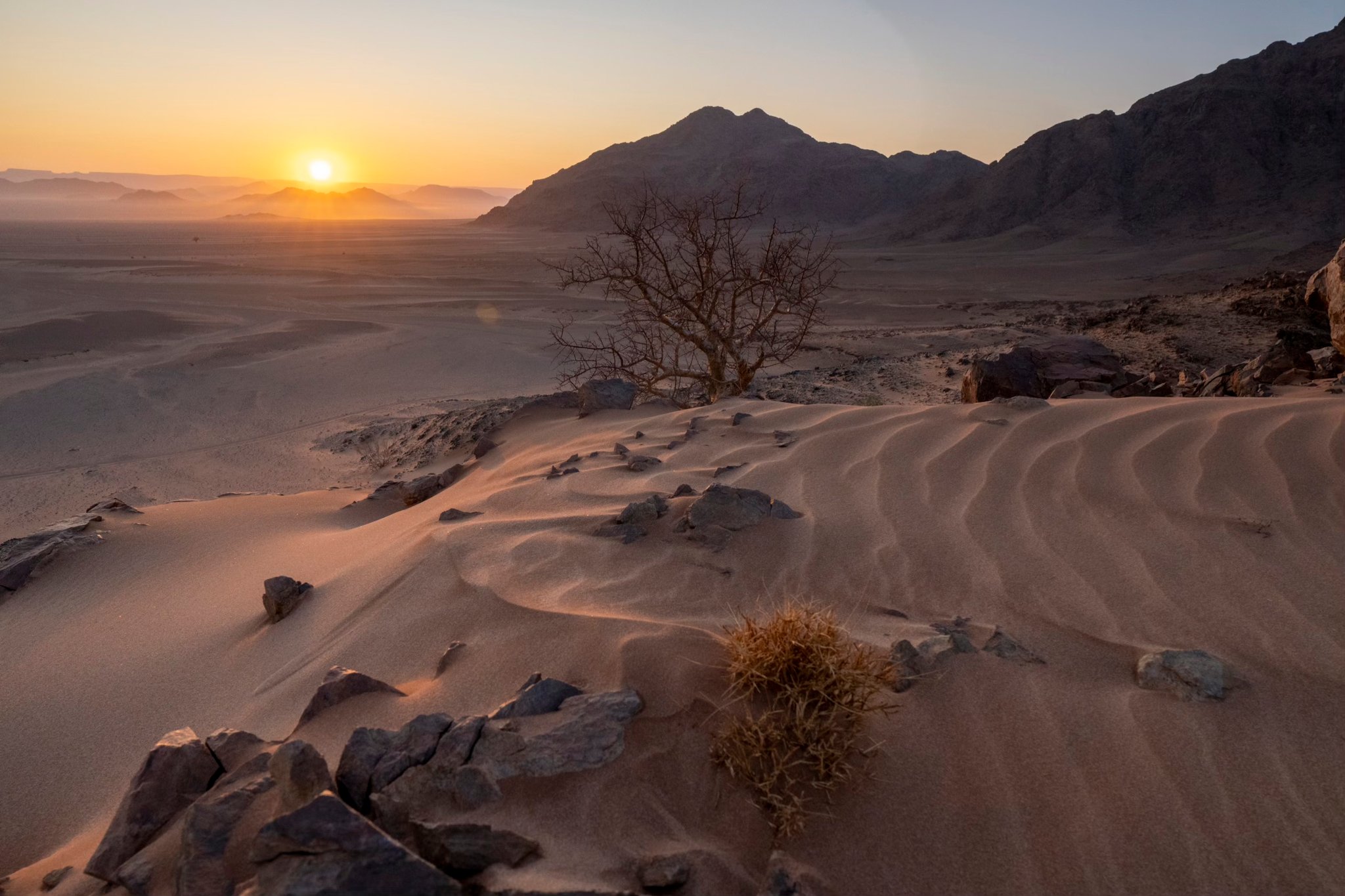

A few hundred miles north, amid the chiaroscuro dunes and mountains of the southern Kalahari, Tswalu is South Africa's largest privately owned reserve at 292,000 acres — a longtime bastion of conservation, (https://www.roarafrica.com/responsible-african-travel) and especially beloved by ROAR AFRICA guests traveling with children. For the San, the Kalahari was not an empty wilderness but a landscape dense with meaning. Every ridge, waterhole and animal trail embedded in a living map of knowledge. In the Kalahari, water was never a minor detail. It determined movement, survival and return. In a landscape defined by vastness and scarcity, places where water gathered would naturally have drawn both people and wildlife back again and again, becoming central points of meeting, observation and exchange. That is part of what makes the ancient San engravings at Tswalu so compelling. Their strong association with water suggests that they were created not in isolation, but in places where life itself converged. To me, that is what gives them such power. They are not simply marks left on stone, but expressions of human presence, meaning and memory placed where the rhythm of the land was felt most acutely.

Into the Karoo


The Karoo is world-famous for its exceptionally rich prehistoric fossils providing a record of life from 300 to 180 million years ago. Here and across the wider Eastern Cape, ancient San rock art sites offer a glimpse into Africa’s earliest stories. Near Graaff-Reinet, this inheritance still quietly endures, inviting one not simply to observe the past, but to feel the depth of human presence that has always lived within this land, including the globally significant Rubidge Collection of fossils. Here, you are invited to feel the depth of both ancient life forms and human presence that has long existed within this fascinating landscape. The Drostdy Hotel in Graaff-Reinet is a particular favorite of mine steeped in history, heritage and comfort and providing exclusive access to some of these sites.

Malilangwe, Zimbabwe

Echoes on stone


Within Zimbabwe's remote Malilangwe Wildlife Reserve, a place especially dear to me as a born and bred Zimbabwean, some of Africa's earliest creative expressions remain embedded in the landscape to this day. The San communities who inhabited this region were drawn to Malilangwe's granite outcrops and sheltered overhangs as both sacred and practical spaces. Etched, drawn and scratched into rock thousands of years ago, their works communicate interpretations of the natural world once layered with movement, symbolism and spiritual meaning. More than one hundred rock art sites are protected within the reserve today. To encounter these remnants of human activity, while on safari immersed in the pristine wild landscape surrounding Singita Pamushana, is a deeply affecting, frankly emotional experience.

Namibia & Botswana

Where Africa remembers



In Namibia's rugged Damaraland, Twyfelfontein holds one of the most extensive collections of ancient rock engravings on the continent, alongside the painted shelters of Brandberg — a sacred mountain the San knew as Dâures which translates to “burning mountain,” a poetic name that echoes the burnt ochre hue of the earth at sunset. This landscape was believed to be the home of Heitsi-Eibib, a central mythic hero figure in San’s spiritual traditions. What strikes you is not simply the age of these works, but what they represent: a way of seeing the world that was deeply attentive to land, animal life, spirit and survival.

Even in the Nyae Nyae Conservancy of northeastern Namibia, it is still possible to spend time with Ju/'hoansi San communities — one of the few remaining groups to maintain ancestral practices on their traditional land. Their knowledge of tracking, medicinal plants and survival reflects a way of life shaped by this landscape since the beginning of time: ancient knowledge not preserved in stone but carried forward through lived experience we are so fortunate to access.

Next, we land in Botswana’s central Kalahari. Around the Ghanzi region, San communities have inhabited incredibly challenging terrain for tens of thousands of years — thriving where others could not, their survival inseparable from an extraordinary depth of knowledge about the land. Spending time with the San communities who still reside here offers a rare and deeply personal connection to a living heritage we feel privileged to share with our guests. The experience offers something exceptional: not heritage preserved behind glass or fixed in stone, but knowledge carried forward through memory, practice and presence.

Lastly, Tsodilo Hills is another site, well away from the classic Okavango Delta safari camp circuit renowned for its extraordinary concentration of ancient rock art that UNESCO describes as over 4,500 paintings spread across the hills. An incredible feat of human creativity to witness today in such a wild, truly isolated landscape, occupied mainly by the teeming wildlife Botswana is so celebrated for.

Delving into these extraordinary places, I am reminded that creativity in Africa is not a modern idea, but something deeply embedded in the continent’s oldest histories. Inspired by wilderness, shaped by ritual and carried through generations, these works reveal a way of seeing the world that feels both ancient and astonishingly present. To encounter this art is to experience Africa differently: not only through its beauty and wildlife, but through the cultural and spiritual inheritance that gives this land such profound depth.

We would be delighted to curate a journey that brings the worlds of art and safari together for you.

Subscribe  
TO RECEIVE THE LATEST UPDATES

By subscribing you're confirming that you agree with our Terms and Conditions.

ROAR AFRICA