Namibia: the art of ease

October 31, 2025
share

I have been planning a trip to Asia and I keep catching myself in that familiar need to gather more information, referrals, suggestions from every resource possible so I don’t miss something – and with that comes more musts, more logistics and more decisions to make. It reminded me why I am always in search of the ROAR AFRICA equivalent wherever I am trying to go (luckily I have Remote Lands to help in this case!).

My life’s work has been to design travel the way I want it but doing it for myself in destinations where I am not an expert is definitely a challenge. I want to land in a place that creates space, slows the pace, lets the shoulders drop and offers stillness and silence, designed by someone whose taste I can trust. I really believe that is the gift ROAR AFRICA brings in a very singular way. All our trips are the ultimate expression of the “art of ease.”

One place many contemplate but few get to is Namibia. It’s a place that literally feels like there is too much air to breathe, too much space to fill and a standstill pace! Without the design and delivery of an expert, you’d never know how spectacular a journey there really is.

I would visit three places: Sossusvlei, Kunene and a quiet night or two near Windhoek on arrival to recover from the international flight.
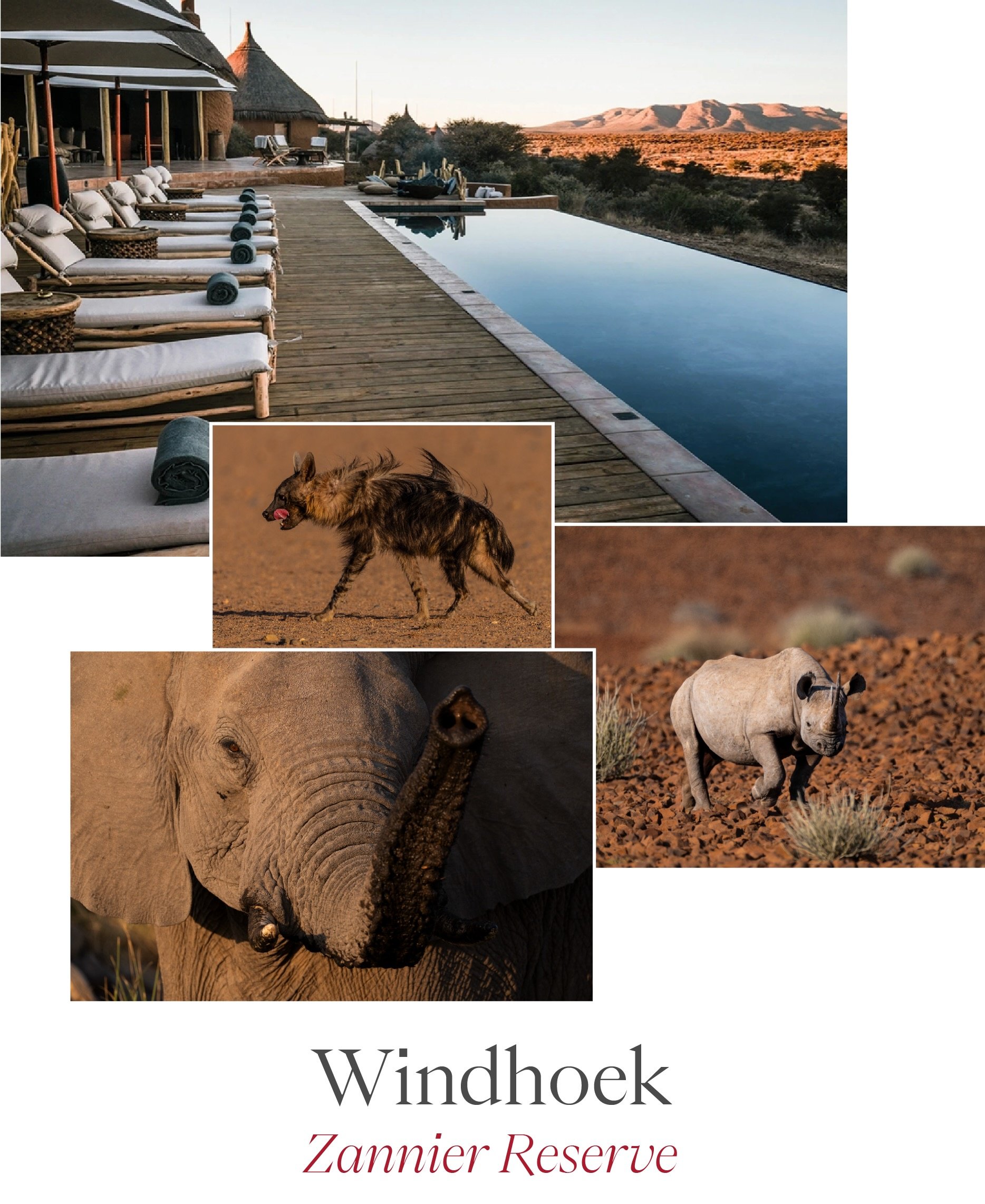
I like to land softly near the capital city, Windhoek, at Zannier Omaanda. The suites are thatched, contemporary-heritage villas overlooking the 7,500 hectare private Zannier Reserve. It’s an elegant decompression and the optional conservation-minded game drives and nature walks are incredibly meaningful. Seeing relocated white rhino and elephant and tracking lions, leopards, cheetahs and hyenas with the conservation team is a powerful reminder of what we must do to protect the future of the continent’s iconic wildlife.

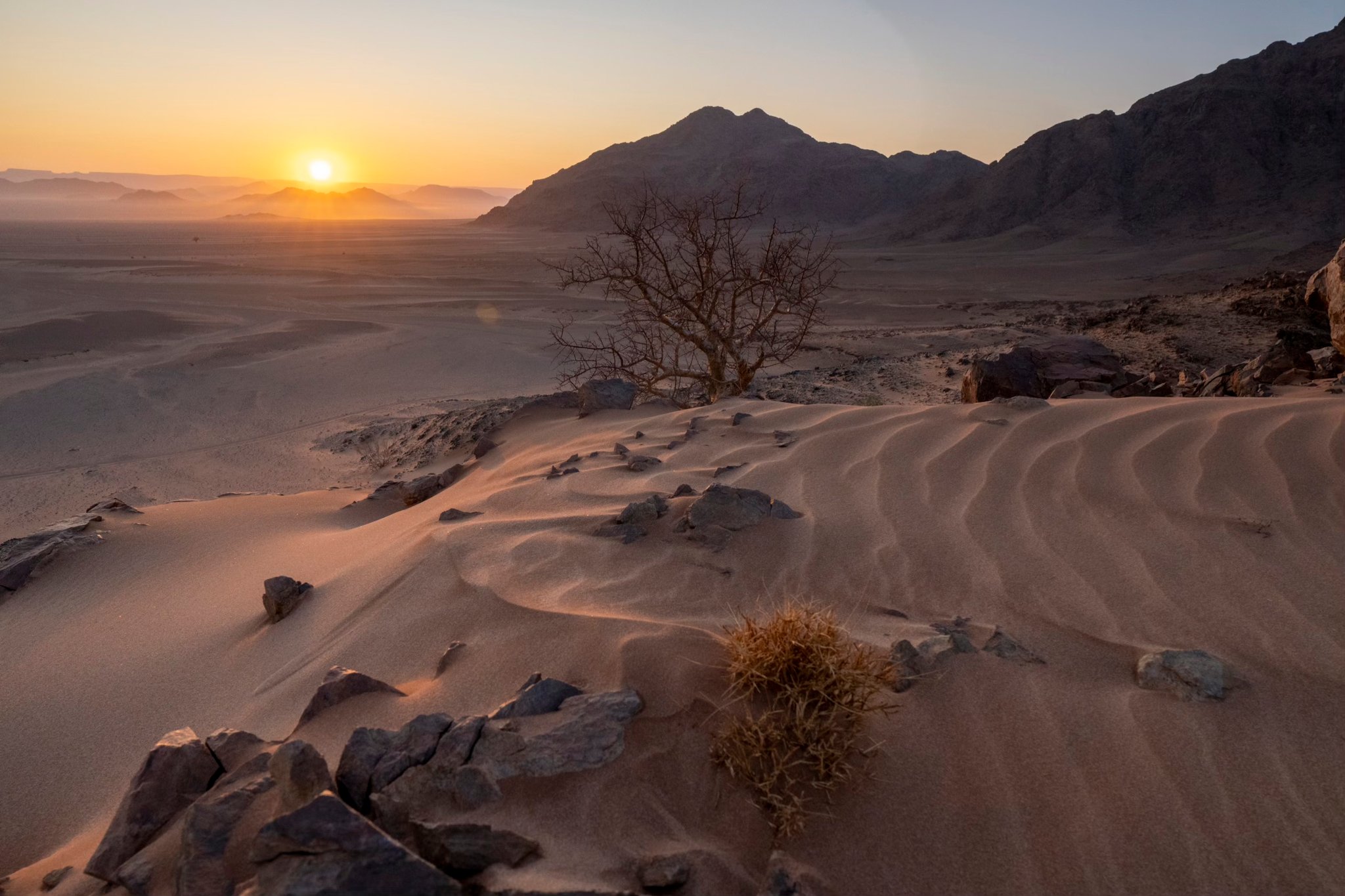

Just an hour by light aircraft from Windhoek, Sossusvlei is transcendent, and if you do only one thing, let it be this. In the Namib-Naukluft, the world’s oldest living desert, dunes rise in hues of apricot, sometimes as soft as ice-cream scoops, sometimes as precise as pyramid geometry.

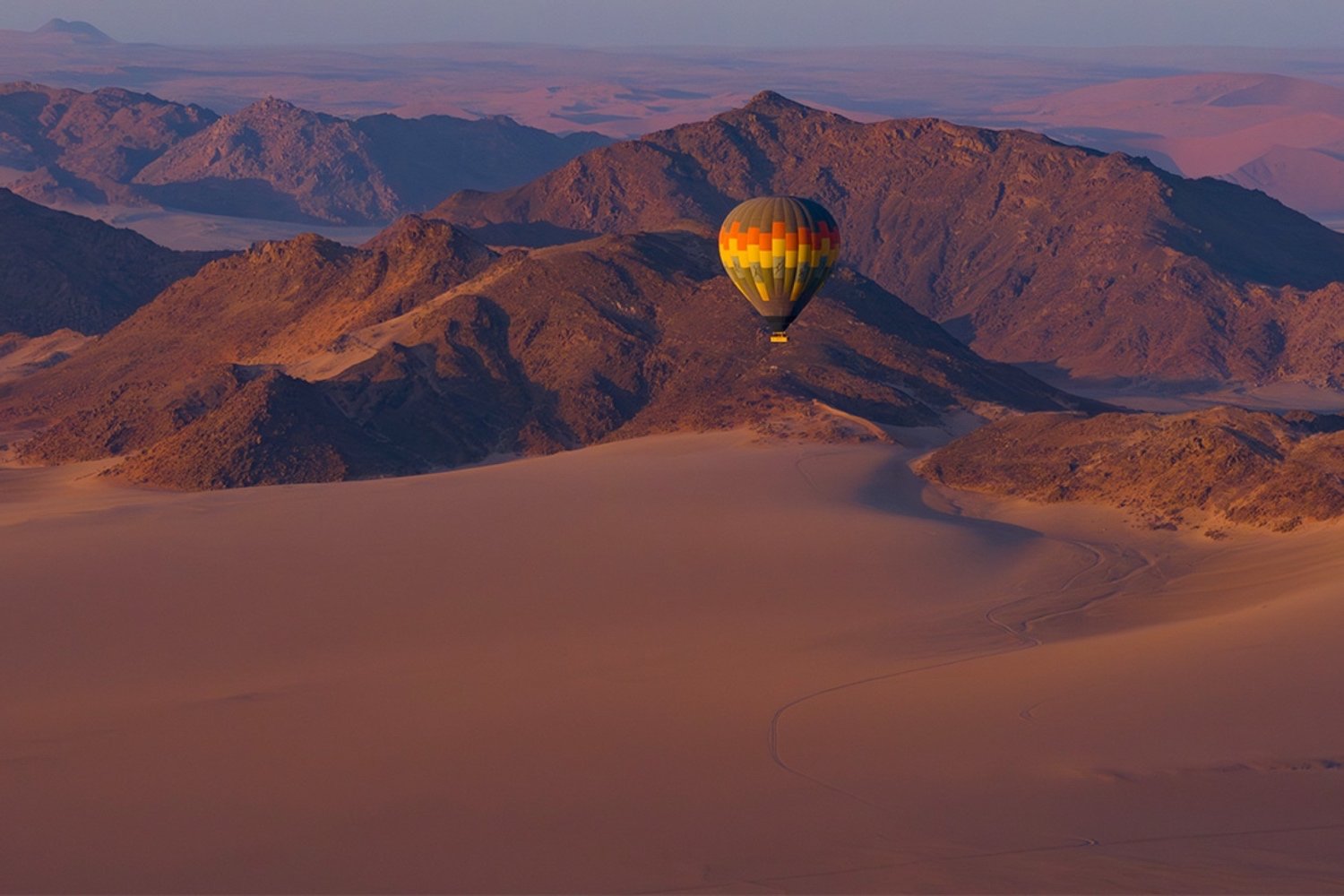
On the ground, it’s all about biking, hiking and quad biking, exploring the gnarled camel thorn trees of Deadvlei and tracing the needle-like ridges of the dunes. However, undoubtedly, the best way to grasp the immeasurable vastness of this landscape is to soar above it, either in a hot air balloon at first light or on a scenic flight. It’s the only way to witness the sheer scale of the desert and see the legions of mysterious fairy circles that dot the ground. Ecologists read the circles as choreography for survival (grasses spacing themselves to harvest moisture), but from above, they feel older than language… a message from the past.

A scenic flight to the dramatic Atlantic coastline is also a must. Almost permanently shrouded in ribbons of fog, watching the caramel dunes collapse into the frothing white surf of the ocean is magnificent. From the sky, you can also see the seals scattered along the shoreline and the only other penguin colony in Africa aside from the Cape.

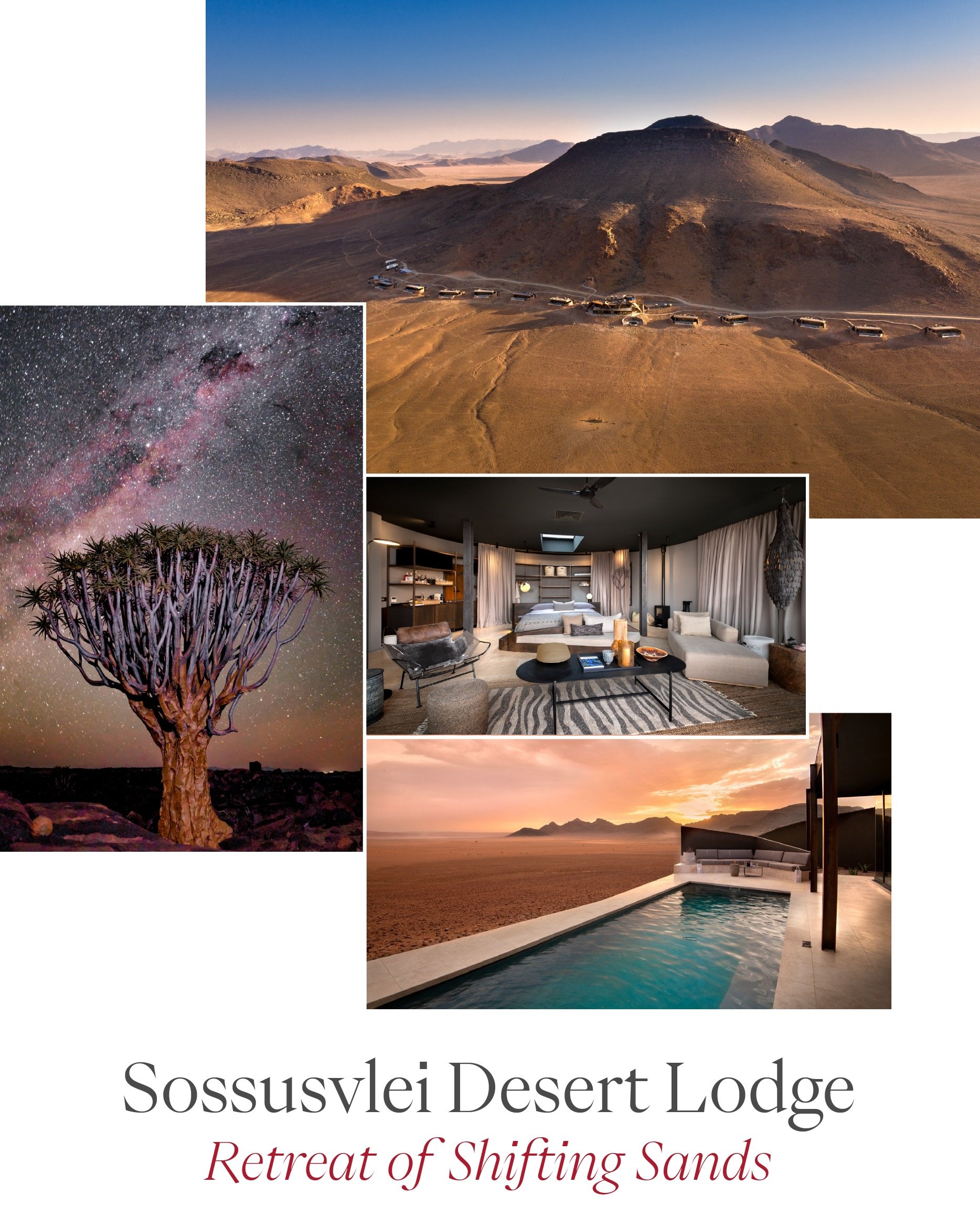
Sossusvlei Desert Lodge is a design-forward glass haven that immerses you in the surrounding wilderness’s kaleidoscopic, ever-changing colors and shifting sands as you gaze out from your private plunge pool. Nightfall in Namibia brings its own magic. There are more stars than I have witnessed anywhere on earth and aided by expertise of a resident astronomer, discovering the constellations is simply magical.


Before maps and roads, the first people of southern Africa, the San, read the deserts of Namibia by listening. Their knowledge is written most clearly at Twyfelfontein in Kunene, the country’s only UNESCO World Heritage Site and the largest concentration of rock petroglyphs in Africa. There are more than 2,500 engravings and paintings to be seen depicting everything from daily life to giraffe, rhino and lion and even mythical figures. They feel less like pictures than instructions: move carefully, look slowly, become aware… Instructions that we could all head.

Kunene is also home to the Himba, pastoral, semi-nomadic people shaped by cattle and seasons, whose red ochre (otjize), sculptural hairstyles and smoke baths signal a life of ritual and lineage. When we visit, it is through long relationships and always on their terms.

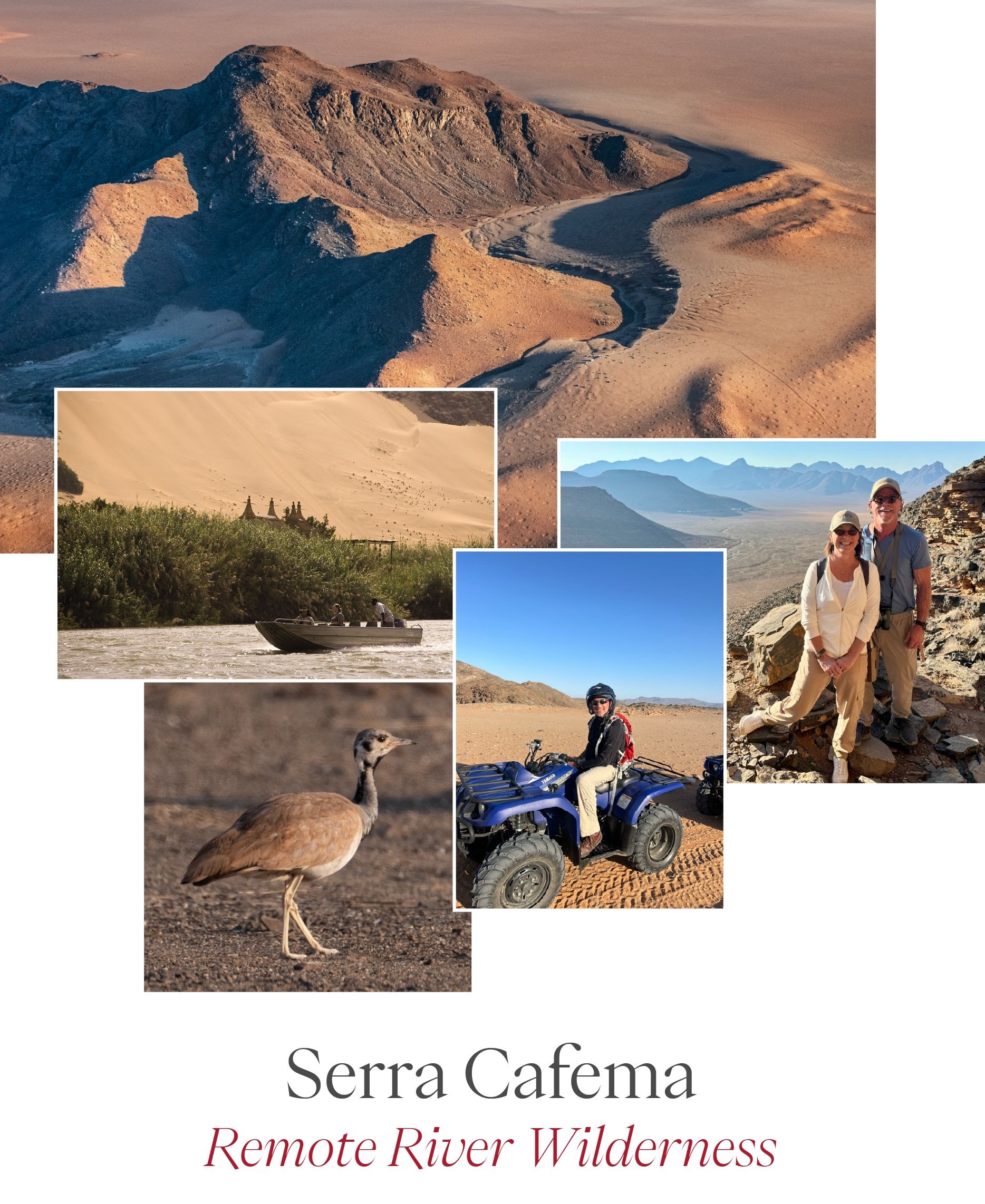
Serra Cafema is where one would stay. The most remote camp in southern Africa, it’s comparable to being on the moon, I imagine. Traditional “game viewing” is of the small herds of gemsbok, springbok and Hartmann’s mountain zebra, but there is much to observe in the Kunene River where boat-sized Nile crocodiles lurk and birds like the Burchell’s courser and Benguela long-billed lark are found. Quad biking across the dunes is also brilliant fun!

A journey to Namibia is for those who value the art of space over speed, insight over spectacle... the true art of ease. Conditions are best from April to October when days are cooler and the skies are clear and beautiful – the optimal time for ballooning and scenic flights. To start planning your life-changing journey to Namibia, please contact us on welcome@roarafrica.com - we would be delighted to craft something just for you.

Subscribe  
TO RECEIVE THE LATEST UPDATES

By subscribing you're confirming that you agree with our Terms and Conditions.

ROAR AFRICA